Hiring someone to build your website is one of those decisions that feels bigger than it actually needs to be. You know you need a site. You know it has to look professional and work properly on a phone. But the moment you start browsing freelance marketplaces, you’re hit with thousands of gigs, wildly different price tags, and vague promises like “stunning design” or “100% satisfaction guaranteed.” It’s hard to know what you’re actually going to get until the project is already underway.
This guide is meant to close that gap. Instead of another generic “top 10 Fiverr designers” roundup, this article walks through the realistic, end-to-end experience of hiring a website design service on Fiverr — what the process looks like from the first message to final delivery, what a fair price actually buys you at different budget levels, which questions separate a serious professional from a template-flipper, and what almost always goes wrong when a project turns out badly. If you’re about to hire your first Fiverr web designer, or you tried once and got burned, this is the practical playbook.
Table of Contents
How Fiverr Website Design Actually Works
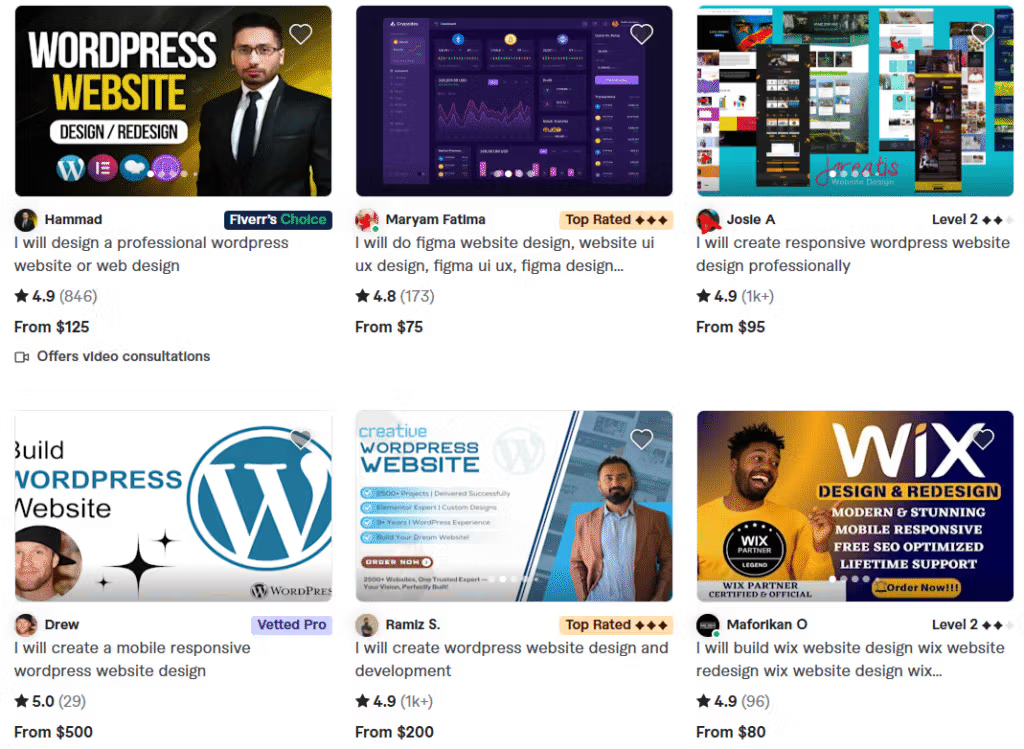
Fiverr’s website design category isn’t a single service — it’s really several different services bundled under one label, and understanding the split matters before you even start browsing.
Website design generally refers to the visual layout, branding, and user experience side of a project: how the homepage is structured, what the color scheme and typography look like, how pages flow into one another. Many designers deliver this as a set of mockups or a build inside a no-code platform like Wix, Squarespace, or Webflow.
Website development refers to the technical build behind the design — the actual coding, database setup, plugin configuration, and functionality that makes the site work, not just look good. On Fiverr, this is usually a separate category, though many sellers offer both design and development as a combined package.
Platform-specific design is its own branch entirely. A WordPress website designer, a Shopify store builder, and a Wix specialist are working with fundamentally different toolsets, so a seller’s platform expertise should match the platform you actually intend to use — hiring a WordPress expert for a Shopify store rarely goes smoothly.
Once you understand which of these you actually need, the buying process on Fiverr generally follows the same pattern regardless of platform: you search and filter by category, price, and seller level; you review gig descriptions and portfolios; you message a shortlist of sellers with your project details; and you either order a pre-built package or request a custom quote for something more tailored.
The Realistic Step-by-Step Process
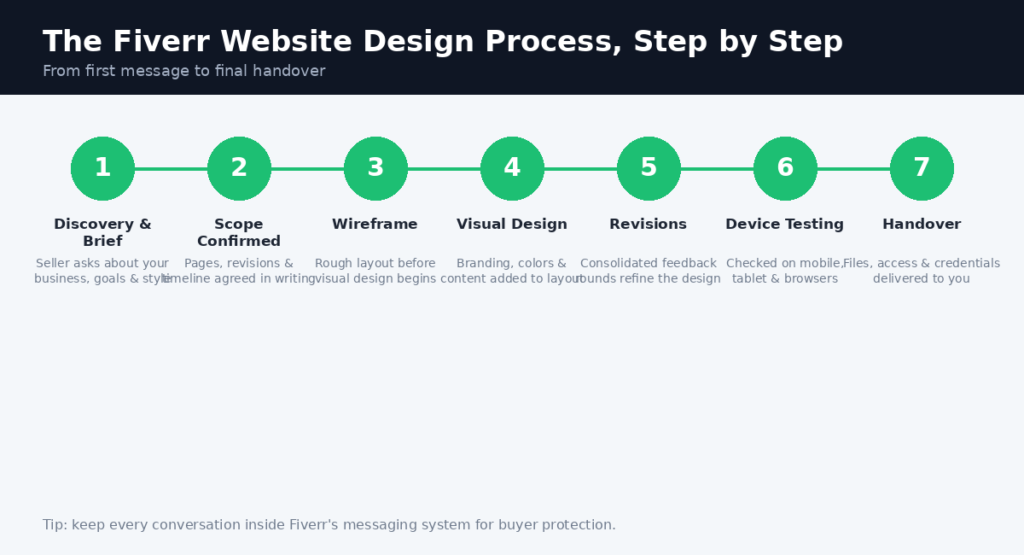
Here is what actually happens once you commit to a seller, from first contact to a finished website.
Step 1: Discovery and briefing. A serious designer will ask questions before quoting anything firm — what your business does, who your target audience is, which competitor sites you admire, what pages you need, and whether you already have branding assets like a logo or color palette. If a seller skips this step entirely and jumps straight to “sure, I can do that for $50,” treat it as a warning sign rather than a bargain.
Step 2: Scope and package confirmation. Once the seller understands your project, you’ll agree on a specific scope: number of pages, whether e-commerce functionality is included, how many rounds of revisions are built in, and the delivery timeline. This is the point to get everything in writing inside Fiverr’s messaging system, since that thread becomes your reference if a disagreement comes up later.
Step 3: Wireframing or initial layout. Better designers start with a rough structural layout — sometimes called a wireframe — before jumping into full visual design. This shows how content will be arranged on each page without worrying about colors or fonts yet, which makes it much cheaper to fix structural problems early rather than after the visual design is finished.
Step 4: Visual design and content integration. This is where your branding, copy, and images get built into the actual layout. If you don’t have final content ready, most sellers will use placeholder text, which means you’ll need a second pass later to drop in your real copy — plan for that extra step in your timeline.
Step 5: Revisions. Every credible package includes a defined number of revision rounds. This is the stage to be specific and consolidated with feedback rather than sending changes one at a time, since scattered feedback tends to slow the process down and can eat through your included revisions faster than expected.
Step 6: Testing across devices. A website that looks great on a designer’s desktop monitor can break down completely on a phone screen. Before final approval, check the site on mobile, tablet, and at least two different browsers, and specifically test navigation menus, contact forms, and any buttons that trigger an action. It also helps to test on a slower connection or with browser caching disabled, since a site that loads instantly on a designer’s fast studio connection can behave very differently for an average visitor.
Step 7: Handover and files. At delivery, confirm exactly what you’re receiving: login credentials, source files, any stock images or fonts used (and whether you have a license to keep using them), and instructions for making basic edits yourself going forward.
What a Fair Price Actually Buys You
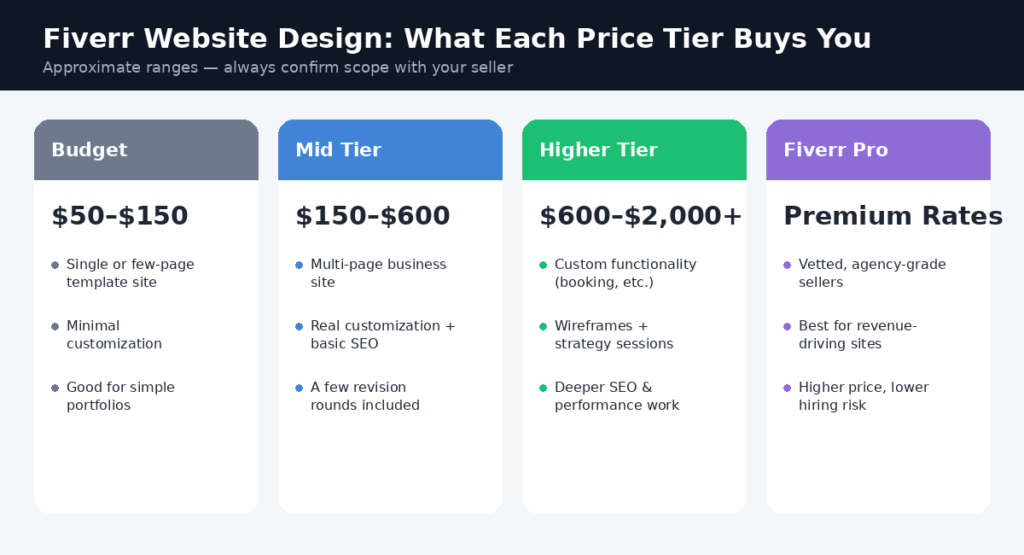
Fiverr website design pricing spans an enormous range, and the difference between a $50 gig and a $2,000 project is rarely just “more expensive version of the same thing.” It typically reflects a genuinely different scope of work.
Budget tier (roughly $50–$150). At this level, expect a single-page or small multi-page site built on a template inside a website builder, with minimal customization beyond swapping colors, logo, and basic text. This tier can work well for a simple portfolio, a landing page, or a placeholder site while you plan something bigger, but it’s not the right choice if you need custom functionality or a highly distinctive look.
Mid tier (roughly $150–$600). Here you’ll typically find a proper multi-page business site with genuine customization, some copywriting or content structuring guidance, basic SEO setup, and a handful of revision rounds. This is the sweet spot for most small businesses that want a professional-looking site without agency pricing.
Higher tier (roughly $600–$2,000+). At this level, expect deeper customization, custom functionality like booking systems or membership areas, more thorough SEO and performance optimization, and often a more structured process involving wireframes and strategy discussions before any visual design starts.
Fiverr Pro and vetted specialists. For businesses that need a more polished, agency-comparable result, Fiverr’s vetted Pro sellers typically charge well above standard marketplace rates specifically because they’ve been screened for professional-grade portfolios and experience. This tier makes the most sense for customer-facing, revenue-driving websites where a mediocre result carries real business cost.
Keep in mind that the number a seller lists on their gig page is often a starting price, not the full cost of your actual project. Extra pages, e-commerce integration, custom animations, and rush delivery are commonly priced as add-ons rather than included by default, so always confirm the full scope-adjusted price before placing an order.
Questions to Ask Before You Hire
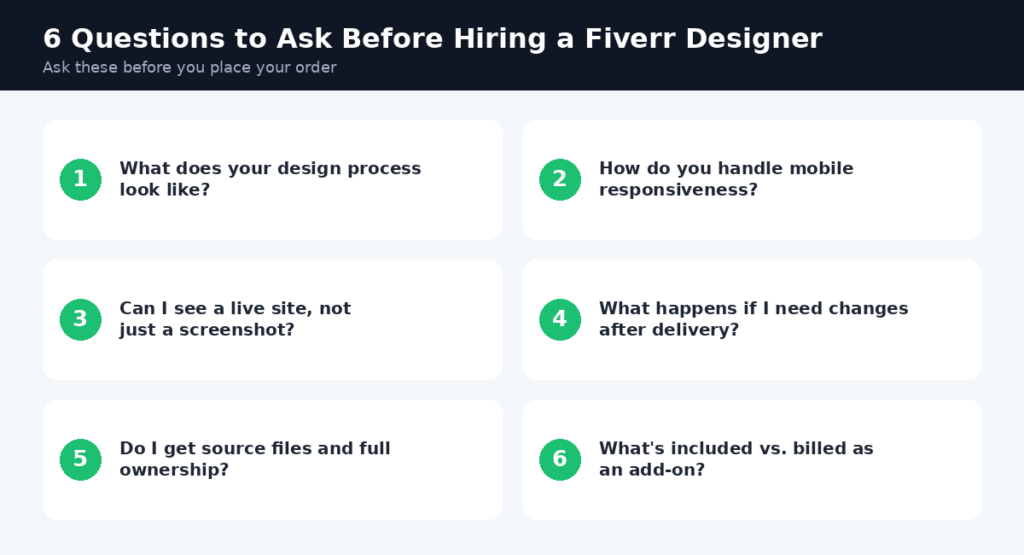
The quality of a website design project is decided largely before any design work begins — during the vetting conversation with a potential seller. A few questions consistently separate strategic designers from template-flippers.
“What does your design process look like?” You’re listening for a structured answer involving discovery, wireframing, and defined revision stages — not just “I’ll send you a draft.” Vague answers here often predict a vague, unstructured project.
“How do you handle mobile responsiveness?” Every legitimate website design service today should treat mobile-friendly layout as a baseline requirement, not an upsell. If a seller treats this as an optional extra, that’s worth questioning.
“Can I see a live site you’ve built, not just a static image?” Portfolio screenshots can hide a lot of problems. A live link lets you test loading speed, navigation, and how the site actually behaves — which is a much better indicator of quality than a polished mockup.
“What happens if I need changes after the project is marked complete?” Clarify whether post-delivery support or minor fixes are included for a limited window, or whether every future change is billed as new work.
“Do you provide source files and full ownership of the design?” For platforms like WordPress, this typically means the editable files and any custom code. For page builders, confirm you’ll retain admin access and aren’t locked into paying the designer for every future edit.
“What’s included versus what counts as an add-on?” Get a clear, itemized answer rather than a general “don’t worry, it’s all included” — the itemized version is what protects you from surprise charges later.
Common Mistakes Buyers Make
A recurring pattern shows up across website design projects that go poorly, and almost all of it is avoidable with a bit of upfront diligence.
Choosing based on price alone. The cheapest gig in a category is rarely cheap by accident — it usually reflects a smaller scope, heavier reliance on unmodified templates, or less experience. That’s not automatically a dealbreaker for a simple project, but it should be a conscious tradeoff, not a surprise.
Skipping the portfolio review. A seller’s star rating tells you they delivered something to past buyers, not that their design style fits your brand. Spend real time looking at actual finished sites, not just the thumbnail images on the gig listing.
Not preparing content in advance. Projects routinely stall because the buyer hasn’t finalized their copy, logo, or product photos by the time the designer is ready to build. Whenever possible, have your core content ready before the project timeline starts.
Sending scattered, one-off revision requests. Feeding a designer a single change request at a time — rather than a consolidated list — burns through timelines and included revision rounds far faster than buyers expect.
Not testing thoroughly before final approval. It’s tempting to approve a project the moment it looks right on your own screen. Testing across multiple devices and browsers before marking the order complete catches problems while they’re still the seller’s responsibility to fix.
Assuming “done” means “finished forever.” Websites need occasional maintenance — software updates, broken plugin fixes, content refreshes. Clarify upfront whether your designer offers ongoing support or whether you’ll need a separate maintenance plan.
Website Builder vs. Custom Development: Which Fits Your Project
Not every website needs custom code, and choosing the right foundation has a big effect on both price and long-term flexibility.
Website builders (Wix, Squarespace, Webflow) are generally faster and cheaper to launch, come with built-in hosting, and are easier for a non-technical buyer to edit afterward. They’re a strong fit for portfolios, small business sites, and landing pages where you want a clean result without ongoing technical dependency on your designer.
WordPress sits in the middle — it offers far more flexibility and a massive ecosystem of plugins and themes, but generally requires more setup and a bit more technical maintenance over time, including hosting and security updates. It’s a common choice for content-heavy sites, blogs, and businesses that expect to keep expanding functionality.
Custom-coded development makes sense when your project needs something a template genuinely can’t deliver — highly specific functionality, tight performance requirements, or deep integration with other business systems. It costs more and takes longer, but it removes the platform limitations that builders and even WordPress themes eventually run into.
If you’re not sure which category your project falls into, it’s reasonable to say so directly to a potential seller and ask for their recommendation — a good designer will steer you toward the simplest platform that meets your actual needs rather than the most expensive one.
What to Include in Your Design Brief
The single biggest factor in how smoothly a project runs is the quality of the brief you hand over on day one. A strong brief doesn’t need to be a formal document — a clear, organized message covers most of what a designer needs to quote accurately and start strong.
At minimum, include your business name and a short description of what you do, the primary goal of the site (generate leads, sell products, showcase a portfolio, provide information), and the specific pages you expect — home, about, services, contact, and anything industry-specific like a booking page or product catalog. Add any existing brand assets you already have, such as a logo, brand colors, or fonts, since building around an established identity is faster and cheaper than creating one from scratch mid-project.
It’s also worth naming two or three websites you like, even outside your industry, and being specific about what you like — the layout, the color palette, the tone of the copy. “I like clean and minimal” means something different to every designer; a reference link removes the ambiguity. Finally, be upfront about your budget range and your ideal timeline. Designers can tailor a realistic proposal around real constraints far better than they can guess at an unstated one.
Signs You’ve Found a Great Fiverr Designer
A handful of small signals tend to show up consistently with sellers who deliver strong results, well before you ever see a finished design.
They ask more questions than they answer in your first exchange, because they’re genuinely trying to understand your business before proposing a solution. Their portfolio shows range — different layouts and styles for different industries — rather than one recycled template with the logo swapped out each time. They can point you to a live, functioning site rather than only static screenshots, and that site actually performs well when you test it yourself. They talk about your project’s goals — conversions, credibility, usability — not just its appearance. And they’re upfront about what’s included versus what costs extra, rather than leaving pricing details vague until after you’ve committed.
None of these signs guarantee a perfect outcome, but taken together, they’re a far more reliable filter than star ratings or order counts alone, especially in a marketplace as large and varied as Fiverr’s website design category.
How to Protect Yourself During the Project
A few habits meaningfully reduce the risk of a disappointing outcome, regardless of which seller or budget tier you choose.
Keep every project conversation inside Fiverr’s official messaging system rather than moving to email or personal chat apps. This preserves your access to Fiverr’s buyer protections and dispute resolution if something goes wrong.
Use milestone-based delivery for larger projects rather than paying the full amount upfront for a long build. Breaking a project into a wireframe milestone, a design milestone, and a final delivery milestone gives you natural checkpoints to catch problems early.
Request a staging link or preview before final files are handed over, so you can review the live, functioning site rather than static screenshots.
Back up any files, credentials, and assets you receive at project completion in a separate, personal location — don’t rely solely on the platform or the designer’s own storage for long-term access.
Frequently Asked Questions
How much does a basic website cost on Fiverr?
Simple, template-based sites commonly start in the $50 to $150 range, while a fuller small-business website with genuine customization more typically falls between $150 and $600. Complex or highly custom projects run well beyond that depending on scope.
How long does a Fiverr website design project usually take?
Timelines vary by scope, but a simple site can often be completed within a week, while a multi-page business site with custom functionality commonly takes two to four weeks. Clarify a specific delivery date with your seller before ordering rather than relying on a general estimate.
Do I own the website after the project is finished?
In most cases yes, but confirm this explicitly. Ask whether you’ll receive full source files or admin access, and check the licensing terms on any stock images, fonts, or premium plugins used during the build.
What’s the difference between Fiverr website design and website development?
Design typically refers to the visual layout and user experience, while development refers to the technical coding and functionality behind it. Many sellers offer both, but it’s worth confirming which one — or both — a specific gig actually covers.
Is it better to hire a Fiverr Pro seller for a website project?
For a simple, low-risk site, a standard marketplace seller is often perfectly sufficient. For a customer-facing, revenue-driving website where a poor result carries real business cost, a vetted Fiverr Pro seller’s higher price is often justified by the reduced hiring risk and stronger portfolio standard.
Can I ask for changes after the project is marked as complete?
This depends entirely on the individual seller’s terms, which is why it’s worth clarifying before you order. Some sellers include a short post-delivery support window; beyond that, additional changes are usually billed as new work.
Final Thoughts
A good website design experience on Fiverr rarely comes down to luck — it comes down to preparation. Buyers who walk in with a clear brief, ask the right vetting questions, and understand what a given price tier realistically includes tend to walk away with a site that actually reflects their brand and functions the way they expected. Buyers who skip that groundwork are the ones who end up frustrated by scope confusion, template limitations, or a design that looked fine in a screenshot but fell apart on a phone screen.
Treat the hiring process itself as part of the project, not a formality before the real work starts. A short, well-prepared conversation with a potential designer before you ever place an order will tell you more about how the project is going to go than any portfolio thumbnail or star rating ever could. Approach it the same way you’d approach hiring anyone into a role that matters to your business — with clear expectations, a defined scope, and enough curiosity to ask a few pointed questions before money changes hands. Do that, and Fiverr’s website design marketplace stops feeling like a gamble and starts working the way it’s meant to: a fast, flexible way to get a professional result without agency overhead.