Discover the 12 best real freelancing websites for beginners. Compare trusted platforms, earning opportunities, and tips to start your freelance career with confidence.
Starting a freelance career can feel overwhelming, especially when you don’t know which platform actually delivers real clients and real payments. The internet is full of freelancing websites that promise “unlimited earning potential,” yet many of them are either oversaturated, poorly moderated, or simply not built with new freelancers in mind.
If you’re a beginner looking for a genuine place to sell your skills — whether that’s writing, graphic design, programming, video editing, voice-over work, or virtual assistance — you need a platform that is beginner-friendly, has real buyer traffic, and offers a fair system for new sellers to get discovered.
In this guide, we’ve hand-picked 12 of the most reliable, beginner-friendly freelancing websites you can join today. For each platform, you’ll find what it’s best for, how it works, its pros and cons, and practical tips to help you land your first client faster. Let’s dive in.
Table of Contents
Why Choosing the Right Freelance Platform Matters
Before jumping into the list, it’s worth understanding why the platform you choose matters so much, especially in your first few months as a freelancer.
- Visibility for new sellers: Some platforms bury new profiles under thousands of established sellers, making it nearly impossible to get your first order. Others are specifically designed to give newcomers a fair chance.
- Payment protection: A trustworthy platform holds client funds in escrow and releases payment only after work is approved, protecting you from non-paying clients.
- Niche fit: Not every platform suits every skill. An illustrator might do better on a design-focused marketplace, while a software developer may find more success on a coding-specific site.
- Learning curve: Beginner-friendly platforms usually have simpler onboarding, clearer guidelines, and more supportive communities or resources to help you build your first gig or profile.
Keeping these factors in mind will help you match your skill set with the platform that gives you the best shot at success. Now, let’s look at the 12 best options.
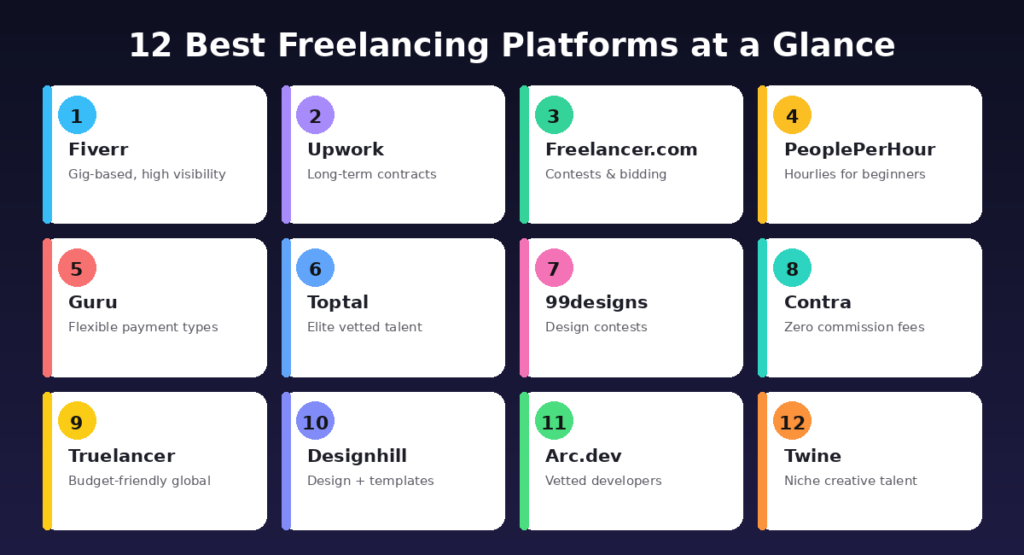
Quick Comparison Table
| Platform | Best For | Beginner Friendliness | Payment Model |
|---|---|---|---|
| Fiverr | Gig-based digital services | High | Fixed-price gigs |
| Upwork | Long-term contracts | Medium | Hourly & fixed-price |
| Freelancer.com | Contests & bidding jobs | Medium | Fixed-price & milestones |
| PeoplePerHour | Hourlies & small business clients | High | Fixed-price & hourly |
| Guru | Flexible project types | Medium | Fixed, hourly, task-based |
| Toptal | Elite tech & finance talent | Low (for total beginners) | Hourly & fixed-price |
| 99designs | Design contests | Medium | Contest prizes & direct hire |
| Contra | Commission-free creative work | Medium | Direct client payment |
| Truelancer | Budget-friendly global projects | High | Fixed-price & hourly |
| Designhill | Design contests & templates | Medium | Contest prizes & marketplace sales |
| Arc.dev | Vetted developer contracts | Low (for total beginners) | Hourly & fixed-price |
| Twine | Niche creative talent | Medium | Direct client payment |
1. Fiverr
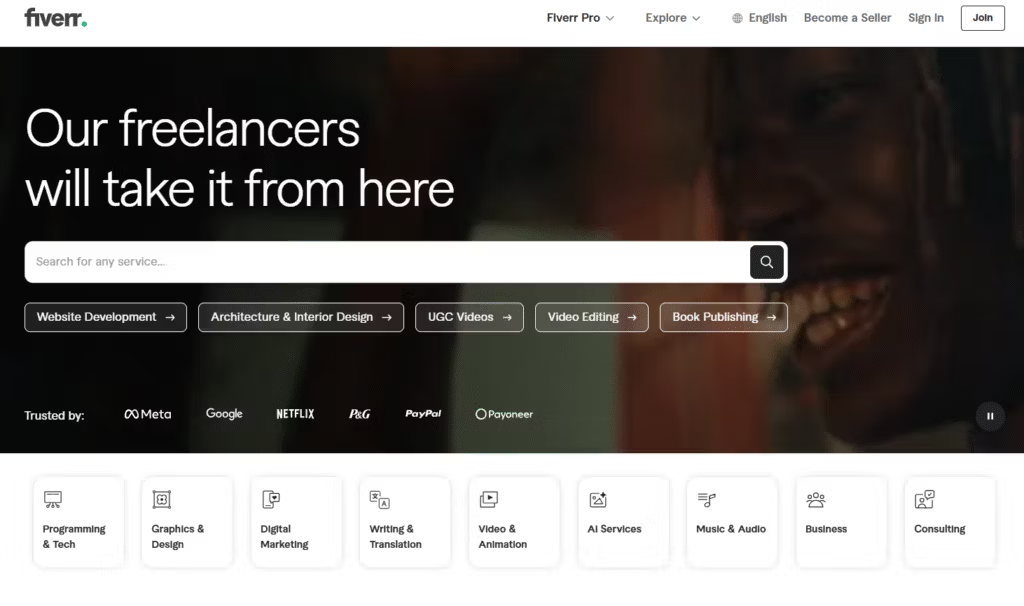
Website: https://www.fiverr.com/
Fiverr remains one of the most popular entry points for new freelancers, largely because of its simple gig-based system. Instead of bidding on jobs, you create “gigs” — pre-packaged service listings with clear pricing tiers — and buyers come directly to purchase your service. This flips the traditional freelancing model on its head and removes a lot of the friction beginners face when writing proposals.
Why it’s great for beginners: Fiverr’s search and recommendation algorithm regularly surfaces new sellers to give them a chance at early orders, especially if your gig is well-optimized with the right keywords, a clear description, and an attractive thumbnail. The platform covers almost every digital skill imaginable, from logo design and voice-over work to SEO audits and social media management.
Pros:
- No bidding wars; buyers come to you
- Huge range of categories and sub-niches
- Beginner sellers can get discovered through search
- Built-in messaging, order management, and dispute resolution
Cons:
- High competition in popular categories like logo design and content writing
- Service fees can add up on lower-priced gigs
- Ranking gigs well takes some learning
Tips for beginners: Focus on a specific, well-defined service rather than trying to offer everything. Use keyword-rich gig titles, write a benefit-focused description, and price your first few gigs competitively to build reviews quickly.
2. Upwork
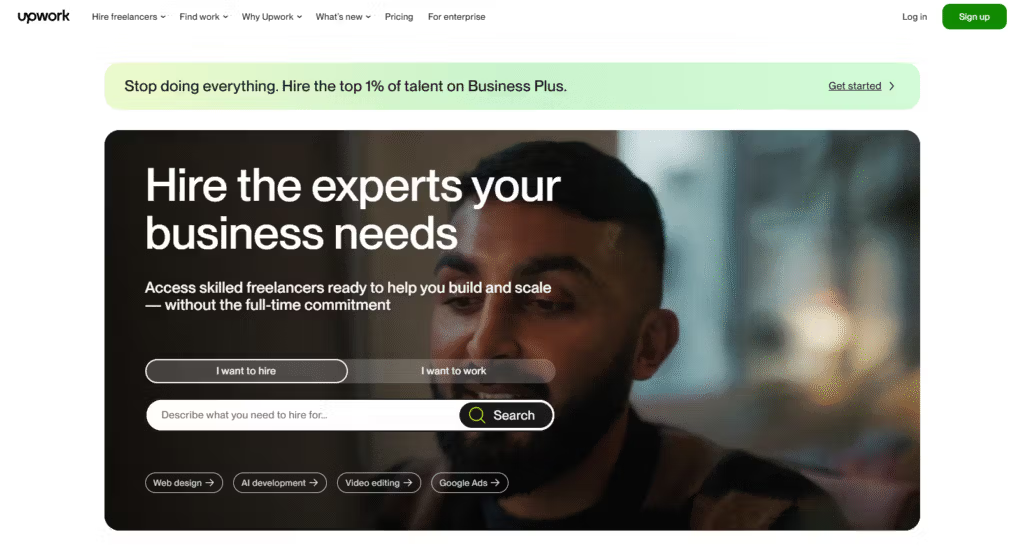
Website: https://www.upwork.com/
Upwork is one of the largest freelance marketplaces in the world, connecting freelancers with clients ranging from solo entrepreneurs to large enterprises. Unlike Fiverr’s gig model, Upwork works on a proposal system — clients post jobs, and freelancers submit tailored proposals explaining why they’re the right fit.
Why it’s great for beginners: Upwork offers long-term contract opportunities, which means once you land a client, you can often build an ongoing working relationship rather than a one-off transaction. The platform also has an extensive skill-testing and portfolio system that lets new freelancers showcase their abilities even without prior platform history.
Pros:
- Access to long-term and recurring projects
- Wide variety of job categories, from writing to software development
- Time-tracking and milestone payment protection for hourly work
- Strong client vetting for larger projects
Cons:
- Connects (proposal credits) cost money, which can be frustrating for new users
- Competition for entry-level jobs can be intense
- Building your first few reviews takes patience
Tips for beginners: Write personalized proposals instead of copy-pasted templates, apply to smaller jobs first to build your rating, and keep your profile focused around a specific specialty rather than a generic “jack of all trades” description.
3. Freelancer.com
Website: https://www.freelancer.com/
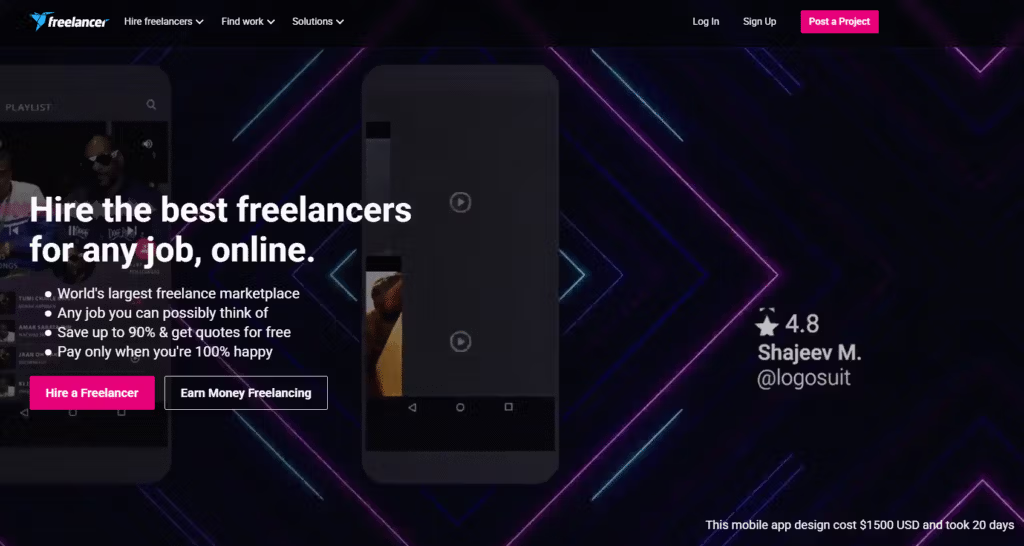
Freelancer.com is one of the older and larger freelance marketplaces, offering both project-based bidding and contest-style work. It covers an enormous range of categories, including writing, design, programming, engineering, and data entry, making it a solid starting point for freelancers in nearly any field.
Why it’s great for beginners: One standout feature is its contest system, where clients post a task (like designing a logo) and multiple freelancers submit entries, with the client choosing a winner to pay. This can be a great way for beginners to practice their craft and get noticed, even before winning a full contract.
Pros:
- Contests allow you to showcase skills without needing a client history
- Wide range of categories and job types
- Membership tiers offer additional bidding perks
- Milestone payment system protects both parties
Cons:
- Bidding wars can drive prices very low
- Some free membership limits can restrict how many bids you place
- Interface can feel cluttered to new users
Tips for beginners: Start with contests to build a visible portfolio, keep your bids realistic rather than racing to the bottom on price, and be selective about which jobs you apply to based on client verification and review history.
4. PeoplePerHour
Website: https://www.peopleperhour.com/
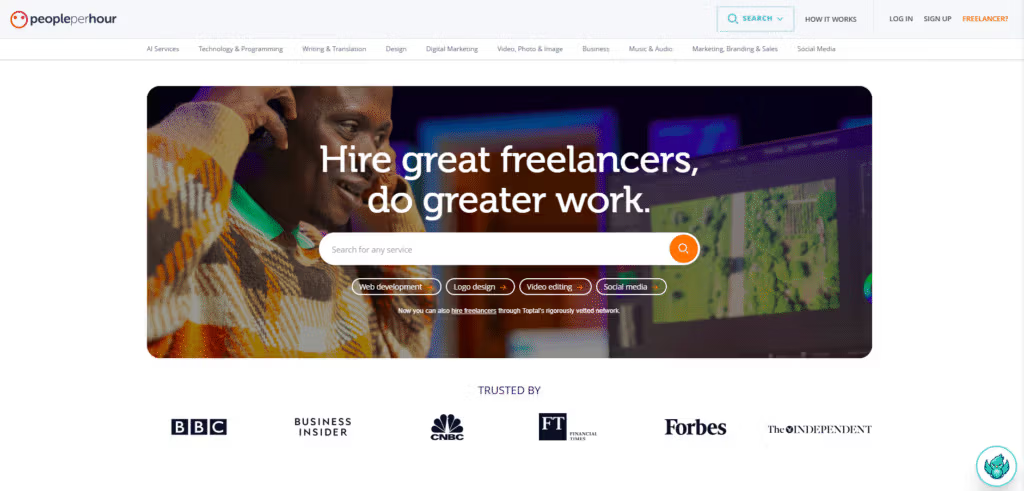
PeoplePerHour is a UK-based freelance marketplace that blends the gig-style “Hourlies” model with traditional proposal-based projects. It’s especially popular among freelancers offering marketing, writing, design, and web development services to small and medium businesses in Europe and beyond.
Why it’s great for beginners: The “Hourlies” feature works similarly to Fiverr’s gigs, letting you create fixed-price service listings that clients can purchase directly. This gives new freelancers a low-friction way to start earning without needing to win competitive proposals right away.
Pros:
- Hourlies offer a beginner-friendly, non-bidding way to get orders
- Strong presence of small business clients looking for ongoing help
- Clear proposal system for larger projects
- Escrow-based payment protection
Cons:
- A limited number of free proposals per month
- Smaller user base than Fiverr or Upwork
- Approval process for some Hourlies can take time
Tips for beginners: Set up a couple of well-optimized Hourlies around your core skill, respond quickly to buyer requests, and keep your profile updated with relevant portfolio samples to build trust.
5. Guru
Website: https://www.guru.com/
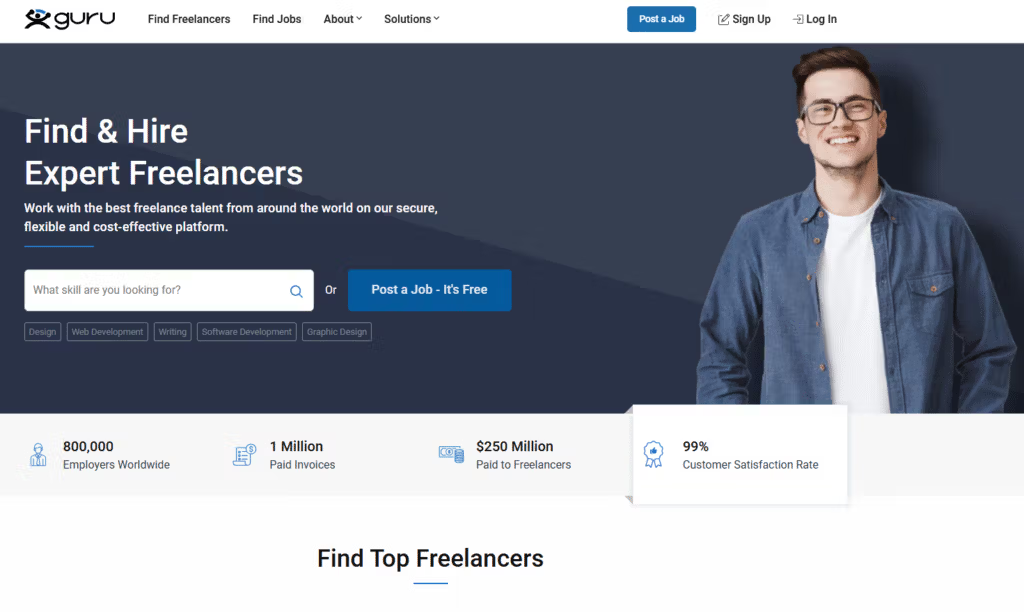
Guru is a long-standing freelance platform that supports a wide variety of work categories, including programming, design, writing, business consulting, and legal services. It’s known for its flexible payment options, including fixed-price, hourly, task-based, and recurring arrangements.
Why it’s great for beginners: Guru’s “Quickmatch” feature notifies you when relevant new jobs are posted, helping beginners spend less time searching and more time applying. The platform’s WorkRoom feature also makes project management and communication straightforward once you land a job.
Pros:
- Flexible payment structures suited to different work styles
- Lower platform fees compared to some competitors
- Useful project management tools built into each contract
- Good for freelancers offering consulting or specialized business services
Cons:
- Smaller client base compared to Upwork or Fiverr
- Interface feels a bit dated
- Getting your first reviews may take longer due to lower traffic
Tips for beginners: Build a detailed profile with certifications or samples relevant to your niche, use Quickmatch actively, and be responsive since faster replies often win jobs on smaller platforms like Guru.
6. Toptal
Website: https://www.toptal.com/
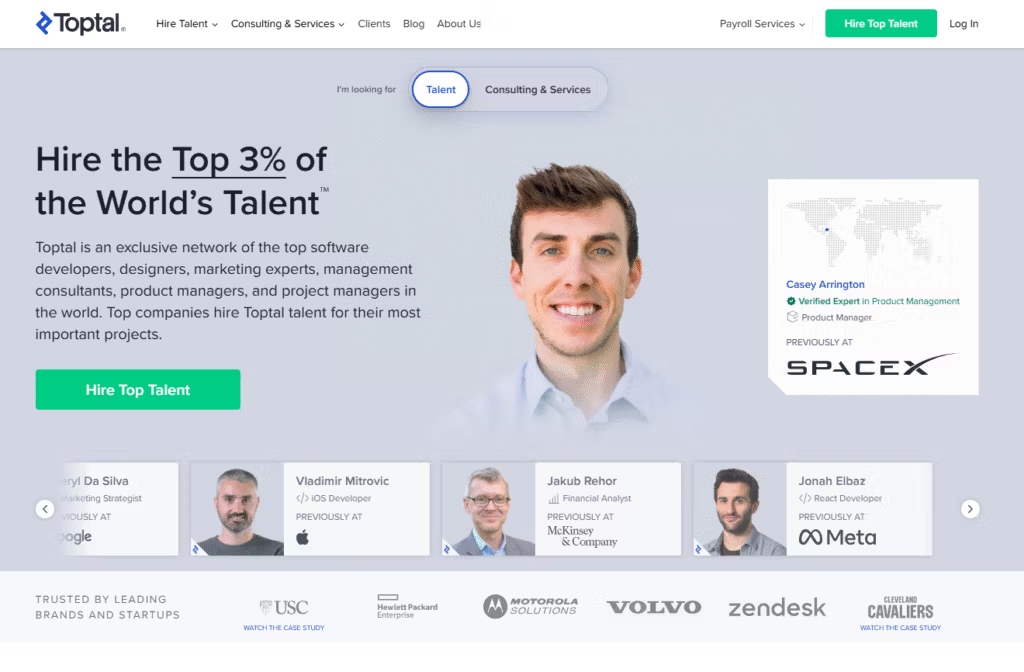
Toptal positions itself as an exclusive network for top-tier freelance talent in software development, design, finance, and project management. It’s known for a rigorous screening process that reportedly accepts a very small percentage of applicants.
Why it matters for ambitious beginners: While Toptal isn’t the easiest platform to get into right away, it’s included here because it represents a clear long-term goal for beginners who are serious about upskilling. If you’re new but building strong technical skills, understanding what Toptal expects — deep expertise, strong communication, and a polished portfolio — gives you a roadmap for where to aim as you grow.
Pros:
- High-paying clients and enterprise-level projects
- Rigorous vetting means less competition once accepted
- Strong reputation that adds credibility to your resume
- Access to a professional freelancer community
Cons:
- Difficult application and screening process
- Not ideal for complete beginners with no portfolio yet
- Primarily focused on tech, design, and finance skills
Tips for beginners: Use other platforms on this list to build experience and a strong portfolio first, then consider applying to Toptal once you have demonstrable expertise and client testimonials to back up your application.
7. 99designs
Website: https://99designs.com/
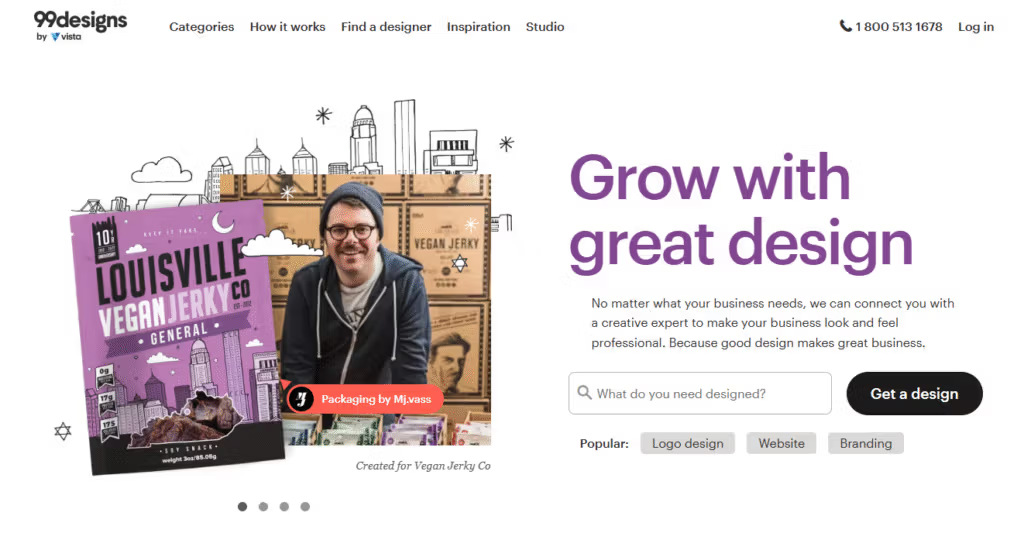
99designs is a specialized marketplace built specifically for designers, covering logo design, web design, packaging, illustration, and branding. It operates through both direct hiring and design contests, similar in spirit to Freelancer.com’s contest model but exclusively focused on visual design work.
Why it’s great for beginner designers: New designers can enter contests without needing an established client history, giving them a chance to be noticed purely based on the quality of their submitted designs. This merit-based exposure can be especially valuable for artists who are strong on skill but new to the platform.
Pros:
- Contest format rewards design quality over reputation
- Highly focused community of design-seeking clients
- Good exposure for building a design portfolio
- Clear categories for different types of design work
Cons:
- Contests mean you’re not guaranteed payment for your time and effort
- Competition among designers can be fierce
- Limited to design-related skills only
Tips for beginners: Choose contests that match your specific design strengths, study winning entries from past contests to understand client preferences, and use every submission — even unpaid ones — as a portfolio-building opportunity.
8. Contra
Website: https://contra.com/
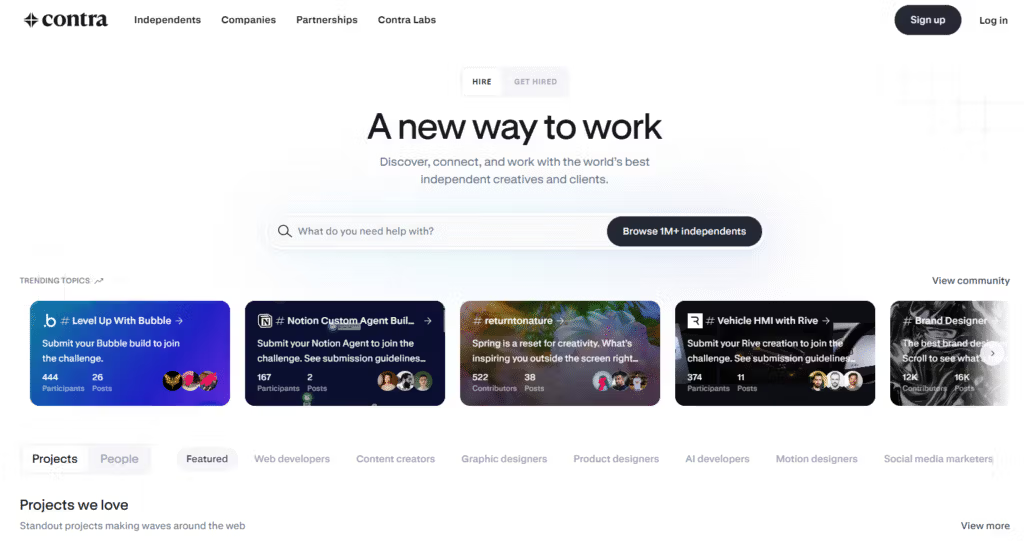
Contra is a newer, modern freelance platform built around the idea of “commission-free” independent work. Instead of taking a cut from your earnings, Contra allows freelancers to showcase a portfolio-style profile and connect directly with clients, particularly in creative, marketing, and tech fields.
Why it’s great for beginners: Because Contra doesn’t charge freelancer commissions, beginners can keep 100% of what they earn from client work booked through the platform. Its sleek, portfolio-first profile design also makes it easy for new freelancers to present their work attractively, even with limited prior experience.
Pros:
- No commission fees on freelancer earnings
- Modern, visually appealing profile and portfolio format
- Growing community of startups and tech-focused clients
- Independent Nation resources offer networking and learning opportunities
Cons:
- Smaller user base compared to more established platforms
- Fewer built-in job-matching features than bigger marketplaces
- Newer platform, so processes are still evolving
Tips for beginners: Build out a strong visual portfolio right away since Contra’s format emphasizes showcasing work samples, and engage with the Contra community to increase your visibility among potential clients.
9. Truelancer
Website: https://www.truelancer.com/
Truelancer is a global freelance marketplace with a particularly strong presence among freelancers and clients in South Asia. It supports a broad range of categories including writing, design, development, digital marketing, and data entry, with both fixed-price and hourly project options.
Why it’s great for beginners: Truelancer’s lower barrier to entry and simpler interface make it approachable for freelancers who are just starting out and may find larger platforms intimidating. It also offers skill tests that let you add verified badges to your profile, helping build credibility even without extensive work history.
Pros:
- Beginner-friendly interface and onboarding process
- Skill tests help new freelancers stand out
- Wide variety of categories and budget levels
- Active client base looking for cost-effective talent
Cons:
- Lower average project budgets compared to Western-focused platforms
- Free membership has bidding limitations
- Payment protection policies require careful reading
Tips for beginners: Take relevant skill tests to earn verification badges, keep your bids clear and specific about deliverables, and gradually raise your rates as you accumulate positive reviews.
10. Designhill
Website: https://www.designhill.com/
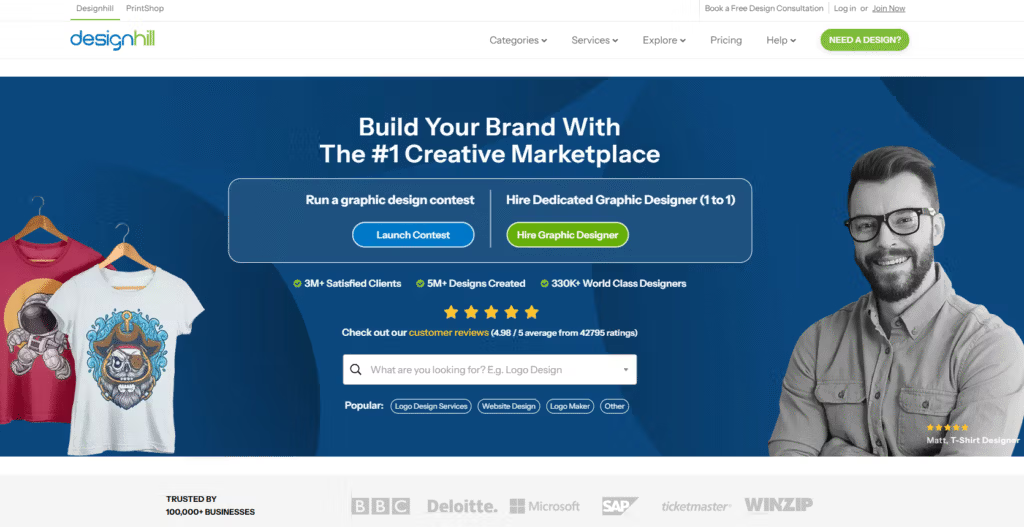
Designhill is another design-focused marketplace, similar in concept to 99designs, where clients post design contests or direct hire projects for logos, business cards, packaging, and web design. It’s particularly popular among small business owners looking for affordable branding work.
Why it’s great for beginner designers: Like other contest-based platforms, Designhill gives new designers a chance to compete purely on the strength of their designs. The platform also offers a marketplace of pre-made design templates, giving beginners an additional way to earn passive income by uploading and selling ready-made design assets.
Pros:
- Dual earning model: contests plus a template marketplace
- Good entry point for beginner logo and branding designers
- Straightforward payment and prize structure for contests
- Marketplace listings can generate ongoing passive sales
Cons:
- Contest-based earnings aren’t guaranteed
- Marketplace competition includes many established sellers
- Design-only focus limits it to visual creatives
Tips for beginners: Try uploading a small batch of original template designs to the marketplace to test demand, and enter contests in niches where you have genuine design strength rather than spreading yourself too thin.
11. Arc.dev
Website: https://arc.dev/
Arc.dev is a freelance and remote job platform built specifically for software developers. It focuses on matching vetted developers with remote contract and full-time opportunities at startups and tech companies, with an emphasis on serious, long-term working relationships rather than one-off gigs.
Why it’s worth knowing as a beginner developer: While Arc.dev does have a vetting process, it’s a useful platform to understand early in your freelance journey if you’re building a career in software development. It also offers salary and rate insights, remote work guides, and resources that can help beginner developers understand market rates and in-demand skills.
Pros:
- Focused specifically on developers and technical roles
- Access to serious, higher-paying remote contracts
- Useful market insights and developer resources
- Vetting process adds credibility once you’re accepted
Cons:
- Requires a technical skill assessment or interview process
- Not suited for non-technical freelance skills
- Less beginner-friendly than gig-based platforms
Tips for beginners: Use free coding resources and smaller freelance platforms to build a solid portfolio of projects first, then apply to Arc.dev once you have real code samples and, ideally, some client testimonials to support your application.
12. Twine
Website: https://www.twine.net/
Twine is a creative freelance marketplace that connects freelancers in fields like design, writing, film, music, and marketing with clients seeking creative talent. It combines a searchable talent directory with a job board, giving freelancers two different ways to find work.
Why it’s great for beginners: Twine’s application process is relatively straightforward compared to more exclusive platforms, and its focus on creative industries makes it a good fit for freelancers whose skills don’t always fit neatly into general marketplaces, such as illustrators, videographers, or musicians.
Pros:
- Strong focus on creative and niche skill sets
- Directory listing plus active job board increases visibility
- Simple application and profile setup process
- Supportive of freelancers in less common creative fields
Cons:
- Smaller overall client base than major generalist platforms
- Job board competition can still be significant in popular categories
- Some features may require a paid membership for full access
Tips for beginners: Fill out your profile completely with a focused portfolio, apply to job board listings that closely match your specific niche, and use client reviews early on to build trust for future applications.
How Beginners Can Succeed on Freelancing Platforms
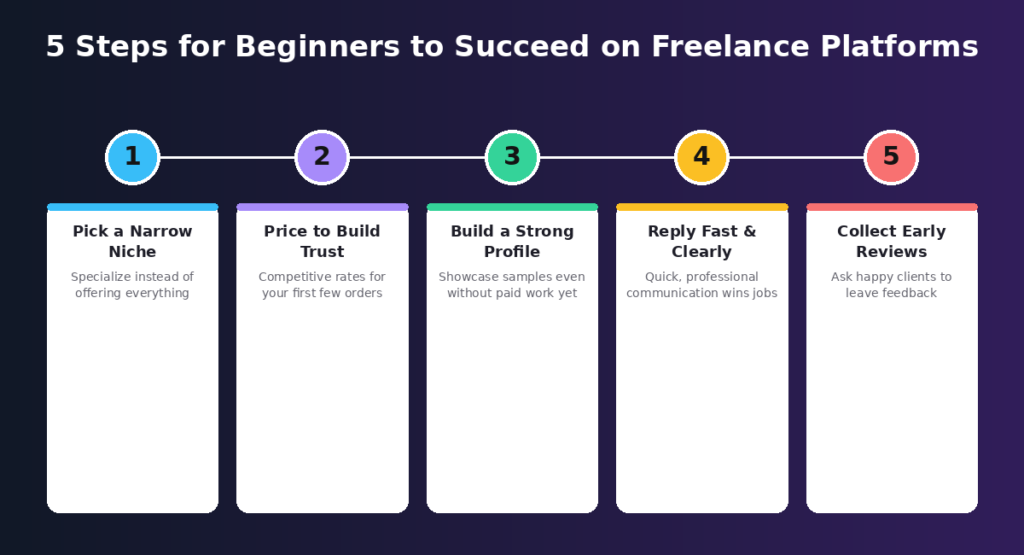
Choosing the right platform is only half the equation. Here are a few practical habits that consistently help new freelancers build momentum, regardless of which site they choose:
1. Start with a narrow niche. Trying to offer every possible service usually backfires. Clients trust specialists more than generalists, especially when they’re comparing sellers with no reviews yet.
2. Price strategically at first. Your very first few projects are about building reviews and trust, not maximizing income. A slightly lower introductory rate can help you land the orders needed to build social proof.
3. Invest in a strong profile and portfolio. Even without paid client work, you can create sample projects that demonstrate your skill level. A complete, professional-looking profile consistently outperforms an empty one, no matter the platform.
4. Communicate clearly and quickly. Fast, professional responses to messages and inquiries often matter as much as skill level when clients are deciding who to hire, especially for smaller projects.
5. Ask for reviews. After successfully completing a project, politely ask satisfied clients to leave a review. Early reviews are disproportionately valuable in building your credibility on any platform.
6. Diversify across platforms once established. Many successful freelancers don’t rely on a single site. Once you’ve built momentum on one platform, consider expanding to a second one that fits your niche to diversify your income streams.
Frequently Asked Questions
Which freelancing website is easiest for complete beginners?
Fiverr and PeoplePerHour tend to be the easiest starting points because their gig/Hourlies model lets clients come directly to you rather than requiring you to win competitive bids against established freelancers.
Do I need a portfolio before joining these platforms?
It helps significantly, but it’s not always mandatory. Platforms like Fiverr and Truelancer allow you to start with sample work or personal projects if you don’t yet have paid client work to showcase.
Are these freelancing websites free to join?
Most platforms on this list offer free sign-up, though some — like Upwork and Freelancer.com — use credit systems or membership tiers that can limit how many proposals you submit for free each month.
Can I use more than one freelancing platform at the same time?
Yes, and many experienced freelancers do exactly this. Just make sure you can realistically manage your workload and respond promptly to inquiries across each platform you join.
Which platform pays the most for beginners?
Earnings vary widely by skill, niche, and demand rather than platform alone. However, platforms like Toptal and Arc.dev tend to attract higher-paying clients, though they also require more experience or vetting to access.
Final Thoughts
There’s no single “best” freelancing website for everyone — the right choice depends on your specific skills, experience level, and the type of clients you want to work with. For most complete beginners, starting with a gig-based platform like Fiverr or PeoplePerHour offers the fastest, lowest-friction path to landing that crucial first order. As you build experience, reviews, and a polished portfolio, platforms like Upwork, Toptal, or Arc.dev become realistic next steps for more advanced, higher-paying opportunities.
Whichever platform you choose, remember that consistency, clear communication, and a willingness to keep improving your craft matter just as much as the platform itself. Pick one or two sites from this list, build a focused profile around your strongest skill, and take the first step today.