If you’ve been shopping around for a new website, you’ve probably hit the same wall almost every business owner hits: should you hire a freelancer on a platform like Fiverr, or should you sign a contract with a full-service web design agency?
It’s not a small decision. Your website is often the first real impression a stranger gets of your business, and the wrong choice can cost you months of delays, thousands of dollars, or a site that looks fine but doesn’t actually convert visitors into customers.
I’ve spent years watching small business owners, solo entrepreneurs, and even mid-sized companies go back and forth on this exact question. So instead of giving you a generic “it depends” answer, this guide breaks down the real differences between Fiverr and traditional agencies — cost, quality, speed, communication, flexibility, and long-term support — so you can make a decision that actually fits your budget and your goals.
Let’s get into it.
Table of Contents
Quick Answer: Which One Should You Choose?
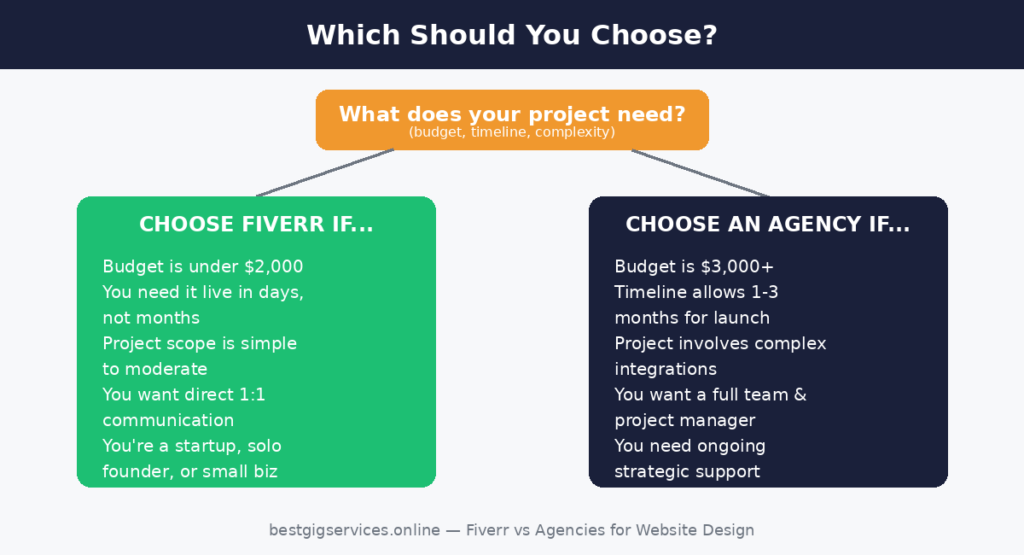
If you’re short on time, here’s the short version: Fiverr tends to be the smarter choice for small businesses, startups, solo founders, and anyone who needs a professional-looking website fast and without a huge budget. Agencies make more sense for large companies that need complex, custom-built platforms, ongoing strategic support, and a dedicated team managing every moving part.
But that quick answer doesn’t tell the whole story, so let’s unpack each factor one at a time.
What Is Fiverr, Exactly?
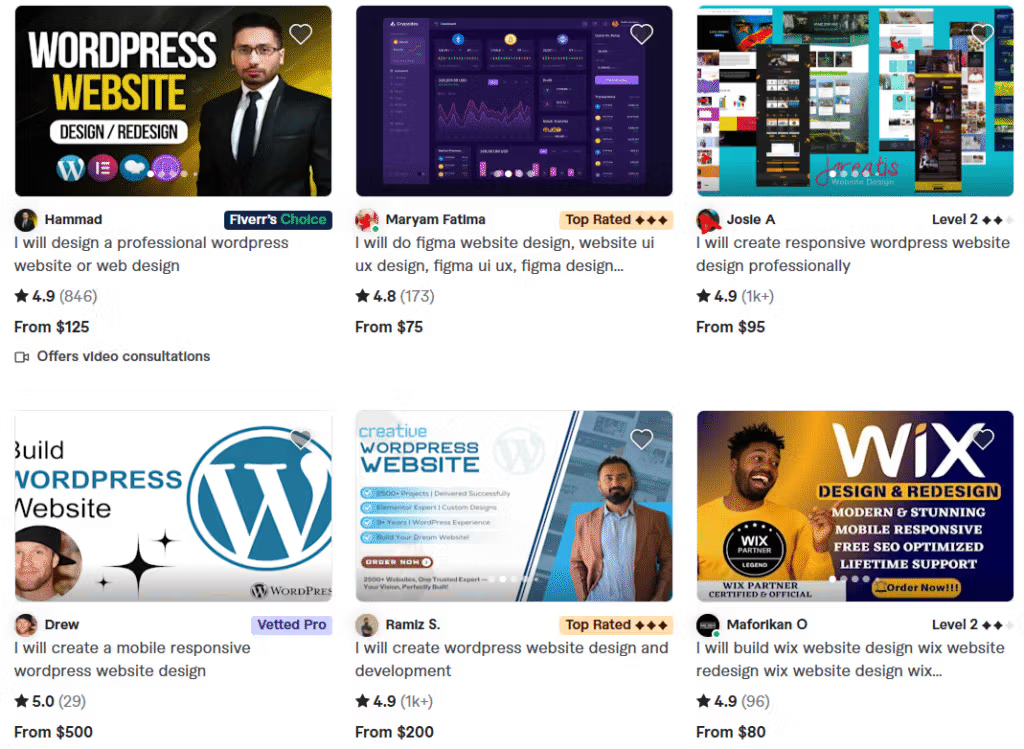
Fiverr is a freelance marketplace where independent designers and developers list their services, called “gigs,” starting at a fixed price. Instead of negotiating an hourly rate or signing a retainer agreement, you browse seller profiles, compare portfolios and reviews, and pick a package that matches your budget — sometimes for as little as $50 to $100 for a basic site.
The platform hosts everyone from brand-new freelancers building their first portfolio to seasoned developers who have shipped hundreds of sites for real businesses. That range is both Fiverr’s biggest strength and its biggest risk, which we’ll talk about shortly.
What Is a Web Design Agency?
A web design agency is a company — usually with a team of designers, developers, copywriters, project managers, and sometimes SEO specialists — that handles your website as a structured project. You typically go through a discovery call, receive a formal proposal, sign a contract, and then work with an assigned team through defined project phases: research, wireframing, design, development, testing, and launch.
Agencies tend to serve businesses that need more than “a website” — they need a digital strategy, ongoing maintenance, and a partner who understands their brand at a deeper level.
Cost Comparison: Fiverr vs Agencies
This is usually the first question everyone asks, so let’s start here.
Fiverr Pricing
Freelancers on Fiverr set their own prices, and packages are typically broken into tiers:
- Basic tier: Around $50–$150 for a simple, template-based site with a handful of pages
- Standard tier: Around $150–$500 for a more customized design with additional pages, basic SEO setup, and revisions
- Premium tier: Around $500–$2,000+ for advanced functionality like e-commerce integration, custom animations, or a fully bespoke design
Because sellers compete openly on the platform, prices stay competitive, and you can filter by budget before you even start browsing.
Agency Pricing
Agencies almost never publish a flat price because every project is quoted individually based on scope. As a general rule of thumb:
- Small business websites: $3,000–$10,000
- Mid-size business or e-commerce sites: $10,000–$30,000
- Enterprise-level platforms: $30,000 and up, sometimes reaching six figures for complex builds
Ongoing retainers for maintenance, updates, and support are usually billed separately, often starting at a few hundred dollars a month.
The takeaway: if your budget is under $1,000, Fiverr is realistically your only option that still delivers professional-quality results. Agencies are built around larger budgets and longer engagements.
Quality and Expertise: Who Actually Does Better Work?
This is where people get nervous about Fiverr, and it’s a fair concern — but the reality is more nuanced than “agencies are better.”
The Case for Fiverr
Many top-rated Fiverr sellers are former agency employees, in-house designers, or freelancers who have built a full-time career purely through the platform. Because their entire income depends on ratings and reviews, they have a direct incentive to deliver quality work and keep clients happy. You can also verify quality yourself before hiring by reviewing:
- Portfolio samples and live website links
- Verified buyer reviews and star ratings
- Response time and communication style during the inquiry stage
- Seller level badges (Level 1, Level 2, Top Rated Seller) that Fiverr assigns based on performance history
The Case for Agencies
Agencies bring a built-in team structure. Instead of relying on one person’s skill set, you get a designer, a developer, and often a project manager collaborating together, which can reduce the risk of any single point of failure. Agencies also tend to have more formal quality assurance processes, like structured testing phases and client sign-off at each stage.
The Honest Verdict
Quality on Fiverr varies more widely because anyone can create a seller account. But if you take 20–30 minutes to properly vet a seller’s reviews and portfolio, you can find freelancers whose work rivals or even exceeds what a mid-tier agency delivers — at a fraction of the cost. Agencies reduce this variance, but you’re paying a premium for that consistency.
Turnaround Time: How Fast Can You Launch?
If you need a website live next week, this factor alone might decide things for you.
- Fiverr: Most basic gigs are delivered within 3–7 days. Even more complex builds rarely take longer than 2–3 weeks, since freelancers are working solo and don’t have to coordinate across departments.
- Agencies: A typical agency project timeline runs 4–12 weeks, and can stretch to several months for larger sites. This isn’t a sign of inefficiency — it reflects the extra layers of strategy, revisions, and internal approvals baked into agency workflows.
If speed matters more than anything else, Fiverr wins this category by a wide margin.
Communication and Collaboration
This is one of the most overlooked factors, and it can make or break your experience regardless of which option you choose.
On Fiverr, you communicate directly with the person doing the actual work. There’s no account manager relaying your feedback to a designer in another department — you message the freelancer, they respond, and changes happen quickly. The downside is that availability varies. Some freelancers work across multiple time zones or juggle several clients at once, so response times can lag if you don’t clarify expectations upfront.
Agencies usually assign a dedicated project manager as your main point of contact. This creates a smoother, more predictable communication flow, especially for larger projects with many moving parts. The tradeoff is that your feedback sometimes passes through an extra layer before it reaches the person actually making changes, which can slow down small revisions.
Customization and Flexibility
Both options can deliver a fully custom website — the difference lies in how much structure is built into the process.
Fiverr gigs are often more flexible because you’re negotiating directly with the person doing the work. Want an unusual layout, a specific feature, or a last-minute change? You can usually just ask, and many freelancers will accommodate it without a formal change request.
Agencies typically follow a structured process, which is great for complex projects but can make small mid-project changes feel more bureaucratic. You may need to submit change requests, and additional costs can apply if the request falls outside the original scope of work.
Scalability and Long-Term Support
If your website needs are going to grow significantly — think adding e-commerce, building out a membership portal, or scaling into multiple regional sites — this is where agencies tend to shine. They’re structured for ongoing partnerships, with retainer packages built specifically around continuous updates, security monitoring, and feature additions.
Fiverr can absolutely handle ongoing work too. Many freelancers offer maintenance packages or are happy to be rehired for future updates, and building a long-term relationship with a trusted seller is common. The difference is that this kind of scaling on Fiverr usually happens informally, gig by gig, rather than through a single all-encompassing contract.
Risk Factors to Watch For
Every option carries some risk, and being aware of them upfront helps you avoid the common pitfalls.
On Fiverr:
- Quality varies significantly between sellers, so skipping the vetting process is the single biggest mistake buyers make
- Some sellers subcontract work without disclosing it, which can affect consistency
- Miscommunication about scope can lead to unexpected extra charges for “add-ons”
With agencies:
- Higher upfront costs mean more financial risk if the final product doesn’t meet expectations
- Longer contracts can lock you in even if the relationship isn’t working out
- Larger agencies sometimes assign junior team members to smaller accounts
The good news is that both risks are manageable with the right amount of due diligence before you commit.
When Fiverr Is the Better Choice
Fiverr tends to be the right fit if:
- You’re a solo entrepreneur, freelancer, or small business owner working with a limited budget
- You need your website live quickly — within days, not months
- Your site doesn’t require highly complex custom functionality
- You’re comfortable reviewing portfolios and vetting sellers yourself
- You want direct, one-on-one communication with the person building your site
When an Agency Is the Better Choice
An agency is usually worth the higher investment if:
- You’re running a larger business with a bigger marketing budget
- Your project involves complex integrations, custom software, or a large-scale e-commerce catalog
- You want an ongoing strategic partner, not just a one-time build
- You need a dedicated team managing design, development, and project timelines together
- Brand consistency across multiple platforms is a top priority
How to Choose the Right Fiverr Freelancer (If You Go That Route)
If you decide Fiverr is the better fit for your budget and timeline, a little preparation goes a long way toward getting agency-level results:
- Write a clear project brief before you start browsing. Include your business goals, must-have pages, examples of sites you like, and your deadline.
- Filter by seller level and reviews. Look for Top Rated Sellers or Level 2 sellers with a high volume of completed orders and detailed, specific reviews (not just generic five-star ratings).
- Check their portfolio for live, working links, not just static screenshots — a live site tells you much more about real-world performance.
- Message them before ordering. Ask a specific question about your project and see how clearly and promptly they respond. This is often the best early indicator of what working with them will actually feel like.
- Clarify revisions and ownership upfront. Confirm how many rounds of revisions are included and that you’ll receive full ownership of source files once the project is complete.
- Start with a smaller package if you’re unsure. Many sellers offer a basic tier you can use as a trial before committing to a larger, more customized order.
Taking these steps typically turns Fiverr from a gamble into a genuinely reliable way to get a professional website built fast.
Real-World Scenarios: Which Option Fits Each Situation?
Sometimes it’s easier to picture your own situation reflected back at you. Here are a few common scenarios and which route tends to make more sense for each one.
Scenario 1: A local bakery wants a simple site with a menu, photos, and contact info. This is a textbook case for Fiverr. The scope is small, the timeline is usually urgent (the owner wants it live before a seasonal rush), and the budget is limited. A mid-tier Fiverr package covering five to seven pages, mobile responsiveness, and basic on-page SEO gets this done in about a week for a few hundred dollars.
Scenario 2: A SaaS startup is raising a funding round and needs a polished site with custom animations, a blog, and a pricing calculator. This sits in a gray zone. A highly experienced Fiverr freelancer or small two-person team can absolutely deliver this, but the founder should expect to pay closer to the premium tier and budget extra time for testing custom functionality. An agency is also a reasonable choice here if the founder wants a single point of contact managing multiple contractors under one roof.
Scenario 3: A regional retail chain with a dozen locations needs a unified e-commerce platform integrated with inventory software across all stores. This is agency territory. The complexity of integrating inventory systems, managing multiple stakeholders, and building a platform that can scale across locations benefits from a coordinated team with formal project management, rather than a single freelancer juggling the entire scope alone.
Scenario 4: An established business wants to redesign an aging website without changing its backend systems. Either option can work here, but the deciding factor is usually the complexity of the existing backend. If it’s a standard WordPress or Shopify setup, a skilled Fiverr freelancer can typically redesign the front end efficiently. If the backend involves custom-built systems or legacy code, an agency’s broader technical bench may be a safer bet.
Fiverr vs Agencies: A Side-by-Side Summary
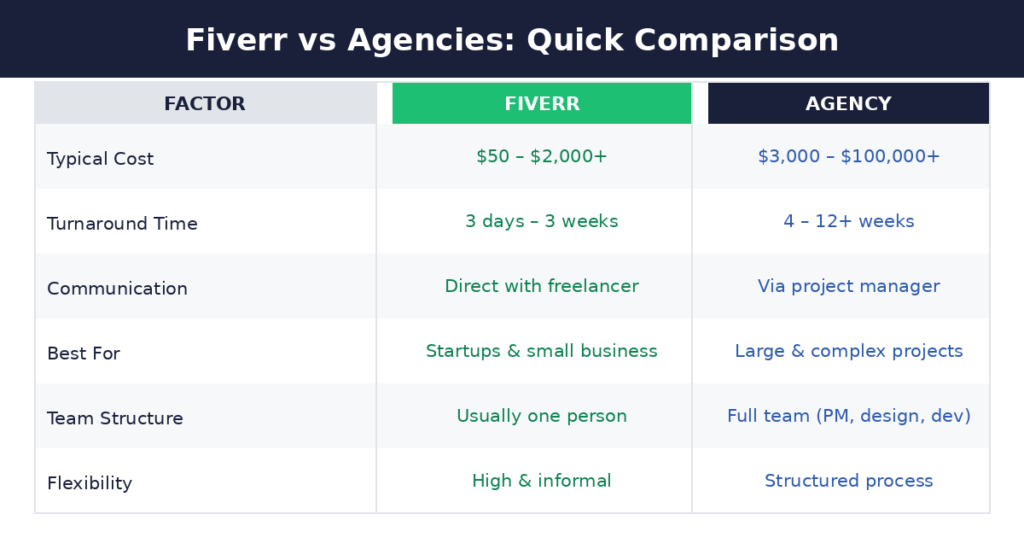
To pull everything together, here’s how the two options stack up across the factors that matter most:
| Factor | Fiverr | Agency |
|---|---|---|
| Typical cost | $50 – $2,000+ | $3,000 – $100,000+ |
| Typical turnaround | 3 days – 3 weeks | 4 – 12+ weeks |
| Communication | Direct with the freelancer | Through a project manager |
| Best for | Small businesses, startups, solo founders | Large businesses, complex platforms |
| Team structure | Usually one person (sometimes a small team) | Full team: design, dev, PM, strategy |
| Flexibility for changes | High, informal | Structured, may involve change requests |
| Ongoing support | Available, arranged gig by gig | Built into retainer contracts |
| Risk level | Varies by seller — vet carefully | Lower variance, higher upfront cost |
A Note on Trust and Vetting, Regardless of Which You Choose
No matter which path you take, the single biggest predictor of a good outcome isn’t the platform — it’s how carefully you vet the people or company you’re hiring. Before signing anything or placing an order, ask to see:
- Recent, live examples of completed work in your industry or a similar one
- Direct testimonials or reviews you can verify independently
- A clear written scope of what’s included, what counts as a revision, and what would trigger extra charges
- A realistic timeline with specific milestones, not vague promises
This applies whether you’re messaging a freelancer on Fiverr or sitting through a sales pitch from an agency account executive. Skipping this step is the most common reason people end up disappointed with either option.
Security and Ongoing Maintenance Considerations
A website isn’t a one-time purchase — it needs updates, security patches, and occasional troubleshooting long after launch. This is an area where the two options handle things differently.
Fiverr freelancers often offer separate maintenance gigs, or you can simply message your original seller to arrange future updates. This keeps things flexible and inexpensive, but it does mean you’re responsible for remembering to schedule those check-ins yourself.
Agencies more commonly bundle maintenance into a monthly retainer, which includes things like automatic backups, security monitoring, and plugin or software updates handled proactively without you needing to ask. This is convenient, but it’s also an ongoing cost that continues well after the initial project ends.
If security and hands-off maintenance are a top priority for your business, factor that into your decision alongside the upfront cost of the build itself.
Frequently Asked Questions
Is Fiverr good for website design?
Yes, for most small businesses and startups, Fiverr is a solid option — especially when you take time to vet the seller’s reviews, portfolio, and communication style before ordering.
Is it cheaper to hire a Fiverr freelancer than an agency?
In almost every case, yes. Fiverr packages typically range from around $50 to a few thousand dollars, while agency projects commonly start in the thousands and can climb into six figures for complex builds.
Can Fiverr freelancers build e-commerce websites?
Many can. Platforms like Shopify, WooCommerce, and WordPress are common specialties among Fiverr sellers, and plenty of top-rated freelancers list e-commerce builds as a core part of their gig offerings.
Do agencies offer better SEO than Fiverr freelancers?
Not necessarily. SEO skill depends on the individual or team, not the platform. Some Fiverr sellers specialize specifically in SEO-friendly web design, while some agencies outsource SEO entirely. Always ask for specific examples of SEO results either way.
What’s the biggest risk of hiring on Fiverr?
The biggest risk is skipping the vetting process. Ordering from the first gig you see without checking reviews, portfolio links, and communication is where most negative experiences come from.
Should a growing business eventually switch from Fiverr to an agency?
Not always, and not automatically. Many businesses stay with a trusted Fiverr freelancer for years as their needs grow. The switch to an agency usually makes sense only when a project becomes complex enough to need a coordinated team rather than one skilled individual.
Final Verdict
There’s no universal “best” option here — only the option that best matches your budget, timeline, and the complexity of what you’re building. Fiverr offers speed, affordability, and direct communication, which makes it the practical choice for the vast majority of small businesses and solo founders launching a new site. Agencies offer structure, scalability, and a full team behind your project, which earns their higher price tag when you’re building something large or highly complex.
If you’re working with a modest budget and need a professional, functional website without months of waiting, start by browsing a few top-rated Fiverr sellers, comparing portfolios, and messaging a couple of candidates before you commit. That one extra step of due diligence is what separates a frustrating experience from a genuinely great one.