An honest, in-depth Fiverr review for buyers in 2026. Learn how Fiverr’s payment protection, dispute system, and seller vetting actually work before you place an order.
If you have ever typed “logo design” or “voiceover artist” into a search bar, chances are Fiverr showed up somewhere in the results. It has grown from a scrappy $5-gig marketplace into one of the largest freelance platforms on the internet, connecting millions of buyers with sellers who cover everything from web development to wedding speeches. But growth attracts scrutiny, and one question keeps surfacing in forums, Reddit threads, and Google searches alike: is Fiverr actually safe to use as a buyer in 2026?
This review breaks down exactly how Fiverr protects (and sometimes fails to protect) the people paying for services on its platform. We’ll look at the payment system, the dispute process, the red flags to watch for, and practical habits that keep your money and your projects secure. No hype, no scare tactics — just a clear-eyed look at what buying on Fiverr really involves.
Table of Contents
What Fiverr Actually Is (A Quick Refresher)
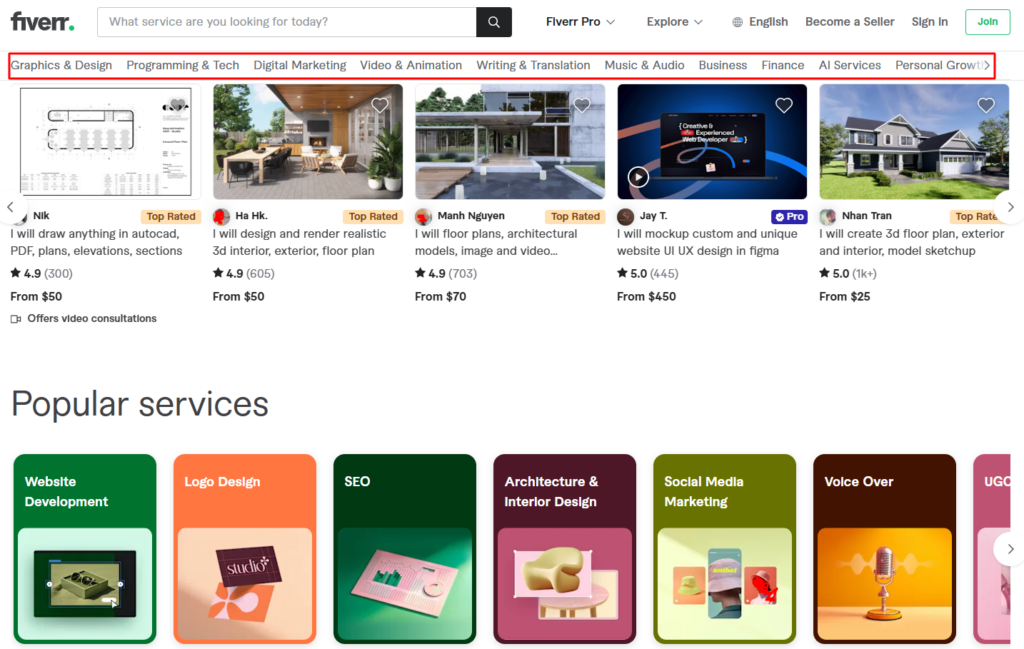
Fiverr is an online marketplace where independent freelancers, called “sellers,” list packaged services known as “gigs.” Buyers browse these gigs, compare pricing tiers, read reviews, and place orders directly through the platform. Categories span graphic design, writing, video editing, programming, digital marketing, music production, and increasingly, AI-related services like prompt engineering and chatbot building.
Unlike traditional job boards where you negotiate a contract from scratch, Fiverr works more like an e-commerce store for services. You pick a package, pay upfront, and the seller delivers within an agreed timeframe. That structure is part of what makes safety such a relevant question — your money leaves your account before you see any finished work.
Is Fiverr Safe? The Short Answer
For the overwhelming majority of transactions, yes — Fiverr is a legitimate and reasonably secure platform for buyers. The company built its entire business model around trust between strangers who have never met, so it has invested heavily in systems designed to reduce fraud on both sides. That said, “safe” doesn’t mean “risk-free.” Like any marketplace with millions of independent sellers, Fiverr has pockets of low-quality work, occasional scam attempts, and buyers who misunderstand how protections apply. Understanding the mechanics behind the platform helps you avoid the small percentage of transactions that go wrong.
How Fiverr Protects Buyer Payments
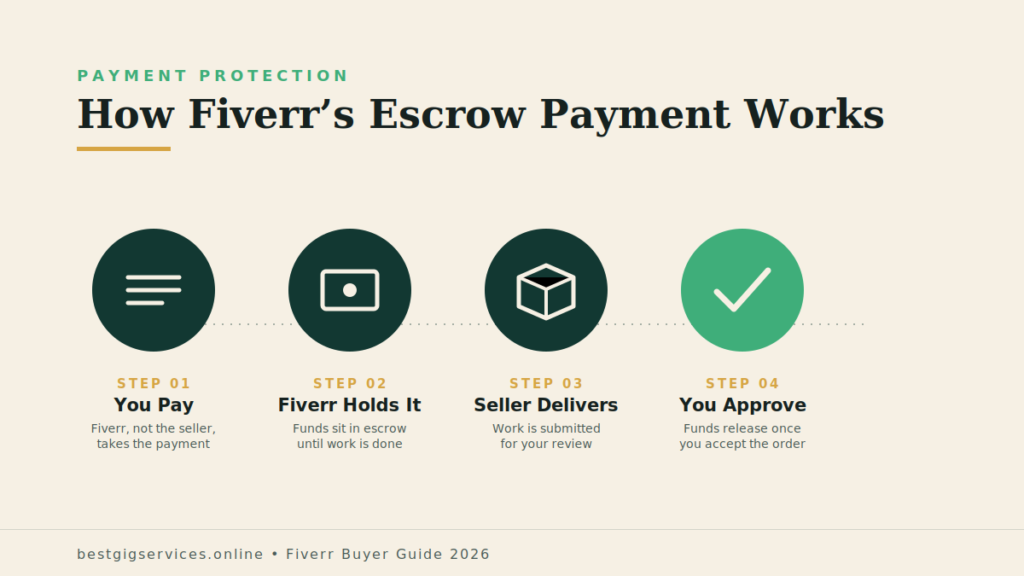
The core of Fiverr’s safety model is that no money goes directly to a seller when you place an order. Instead, your payment sits with Fiverr until the work is delivered and you mark the order complete, or until the review period expires automatically. This escrow-style structure means a seller cannot simply disappear with your funds without delivering anything, because Fiverr — not the seller — is holding the payment.
Fiverr also processes every transaction through its own checkout system rather than allowing direct transfers between buyer and seller. Because it operates as a Level 1 PCI-DSS compliant payment processor, the highest tier of card-data security certification in the industry, your card details are encrypted and never shared with the freelancer you’re hiring. Whether you pay by credit card, debit card, PayPal, or a regional payment method, the seller only ever sees that a payment was made — never your actual financial information.
The Order and Delivery System
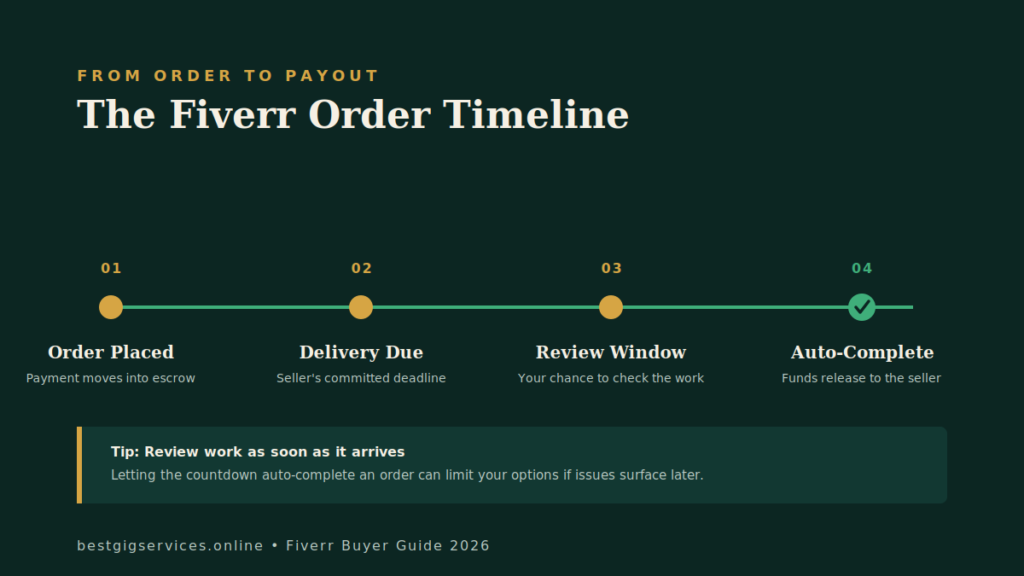
Every Fiverr order runs on a structured timeline. When you purchase a gig, the seller commits to a specific delivery date. If they miss it, you’re entitled to cancel without penalty in most cases. Once the seller submits the work, you get a review window to check it before the system automatically marks the order as complete and releases payment. This automatic-completion window is worth remembering — many buyer complaints trace back to someone letting an order auto-complete without actually reviewing the delivered files, only to discover problems afterward when reversing the payment becomes harder.
The practical lesson here is simple: always open and evaluate what you receive as soon as it lands, rather than letting the countdown timer make the decision for you.
What Happens When Something Goes Wrong
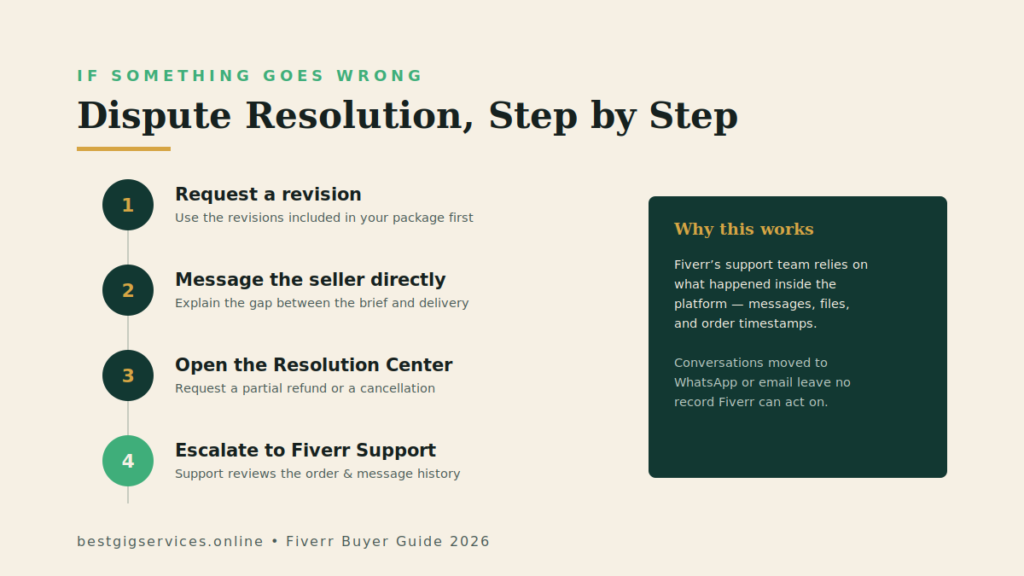
Fiverr offers a built-in resolution center for buyers who receive incomplete, incorrect, or low-quality work. You can request revisions (the number of included revisions depends on the gig package you bought), ask for a partial refund, or escalate to a full cancellation if the seller can’t fix the issue. If the two of you can’t agree, Fiverr’s Trust and Safety and Customer Support teams can step in to review the order history, delivered files, and message thread to make a judgment call.
This is where keeping every conversation on-platform really pays off. Fiverr’s messaging system doubles as your evidence trail. If a dispute needs human review, the support team relies on what was actually said and delivered inside the platform — not on screenshots from WhatsApp or email that are easy to dispute or fabricate. Buyers who move conversations off Fiverr to “save time” often find themselves with far less leverage if a project falls apart.
Common Risks Buyers Should Actually Watch For
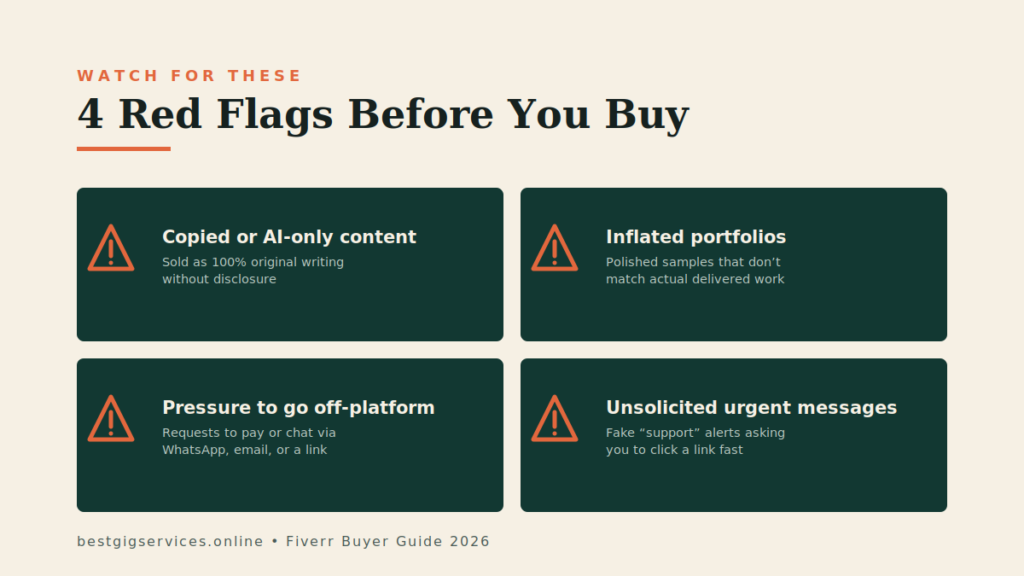
Fiverr’s infrastructure handles the payment side reasonably well, but no platform can fully police the quality or originality of what freelancers produce. A few recurring issues show up often enough to be worth naming directly:
Plagiarized or AI-generated content passed off as original work. Some sellers in writing- and content-heavy categories submit material that’s lightly reworded from other sources, or generated entirely by AI tools without disclosure. If originality matters for your project, run deliverables through a plagiarism or AI-detection checker before approving the order.
Portfolio inflation. A polished gig page with stock-photo-style samples doesn’t always reflect the seller’s actual skill level. Cross-check reviews, not just star ratings — read a handful of the written comments, especially any critical ones, to see how the seller handled feedback.
Pressure to move off-platform. A seller suggesting you continue on WhatsApp, email, or a direct payment link isn’t automatically a scammer, but it is automatically a red flag. The moment a transaction happens outside Fiverr, none of the platform’s payment or dispute protections apply anymore. If something goes wrong after that, Fiverr has no record to investigate and no funds to return.
Fake urgency or unsolicited messages. Buyers occasionally get messages from accounts posing as Fiverr support or as a seller they’ve never contacted, pushing them to click a link or share account details. Fiverr’s real support team will never ask for your password, and legitimate sellers can only initiate contact after you’ve reached out or placed an order.
None of these risks are unique to Fiverr — they exist on nearly every freelance marketplace — but knowing what they look like in advance makes them far easier to sidestep.
Practical Safety Checklist Before You Buy
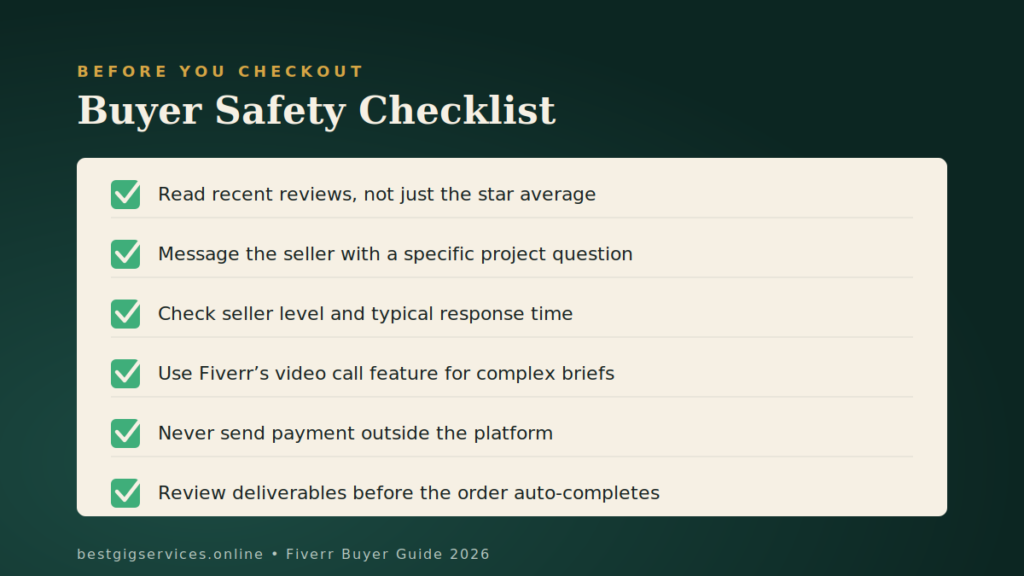
A little diligence before checkout goes a long way toward a smooth experience:
- Read recent reviews, not just the overall rating. A seller with a 4.9 average but several recent complaints about missed deadlines tells a different story than a static number.
- Message the seller with a specific question about your project first. Vague, copy-pasted replies are often a sign of low engagement or an overloaded seller juggling too many orders.
- Check seller level and response time. Fiverr’s tiered seller system (New Seller, Level One, Level Two, Top Rated) reflects a track record of completed orders and buyer satisfaction over time, though newer sellers can still be excellent — the badge is a signal, not a guarantee.
- Use Fiverr’s built-in video or voice call feature for complex projects instead of third-party apps. It keeps the conversation documented and secure.
- Never send payment outside the platform, even if a seller frames it as a discount or a favor.
- Review deliverables promptly instead of letting the order auto-complete unchecked.
Fiverr vs. Hiring a Freelancer Directly
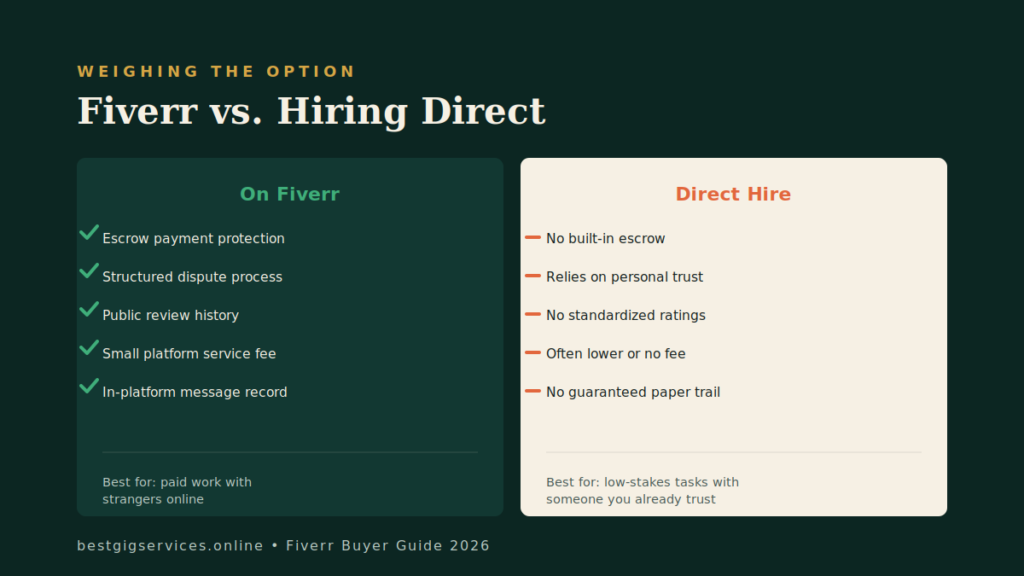
It’s worth addressing the obvious alternative: why not just find a freelancer through social media or a personal referral and skip the platform fees entirely? The honest answer is that you can, and sometimes it works out fine — but you’re trading Fiverr’s structure for pure trust. There’s no escrow, no standardized dispute process, and no review history to lean on if the freelancer ghosts you mid-project. The small service fee buyers pay on Fiverr is essentially the cost of that safety net: secure payment processing, a searchable reputation system, and a neutral third party to appeal to if things go sideways.
For one-off, low-stakes tasks with someone you already trust, going direct can make sense. For anything involving upfront payment to a stranger, a platform with built-in protections is almost always the safer route.
Is Fiverr Worth It for Buyers in 2026?
Weighing everything together, Fiverr remains one of the more buyer-friendly freelance marketplaces available today. Its payment escrow system, PCI-DSS-level security standards, structured dispute process, and message-based paper trail give buyers meaningfully more protection than an unstructured, off-platform hire. The platform isn’t immune to bad actors — no marketplace of its size is — but the tools to avoid them are built in, provided you actually use them: stay on-platform, read reviews critically, check work before approving it, and treat any pressure to go around Fiverr’s system as a warning sign rather than a convenience.
Used deliberately, Fiverr is a safe and practical way to hire freelance talent in 2026. The platform did the hard part by building the infrastructure — the rest comes down to buyers applying a bit of common sense at checkout.
Frequently Asked Questions
Does Fiverr refund buyers if a seller doesn’t deliver?
Yes. If a seller misses the delivery deadline or fails to complete the work, you can typically cancel the order and receive a refund through Fiverr’s resolution process.
Can a seller see my payment information on Fiverr?
No. Fiverr processes all payments internally, so sellers never see your card number, billing address, or other financial details.
What should I do if I suspect a scam on Fiverr?
Stop all communication with that user, avoid clicking any links they’ve sent, and report the account through Fiverr’s Trust and Safety reporting tool so their team can investigate.
Is it safe to pay Fiverr sellers outside the platform for a lower price?
No. Doing so removes every protection Fiverr offers, including refunds and dispute resolution, regardless of how the request is framed.
How do I know if a Fiverr seller is trustworthy?
Look at their completed order count, recent review comments, response rate, and seller level. A consistent track record over time is a stronger signal than a high rating with very few reviews.